Justine's Canon 2026
AKA an impulsive, not particularly well thought out list of favourite films

Every spring since 2014, I’ve put together a list of my 100 favourite films. It’s not a particularly thoughtful exercise: I sit down on my computer, look through every film I’ve ever watched on Letterboxd and put together a list. It’s a snapshot of a moment; not only of a year, but of that specific day. It’s more than just inexact, it’s more of a whim than a list.
Looking back at my first list from twelve years ago, the top twenty is entirely different. Movies like The Shining, Baby Doll and The Searchers have fallen off the list completely. Most of the films that I’ve removed over the years are ones I haven’t seen very frequently. In rare cases, such as In the Mood for Love and Zodiac, my love has soured mostly. It’s not that I consider either a bad film, they just no longer excite me the way they once did. In the Mood for Love’s romance now feels false, a pantomime of longing that is more surface than substance. Fincher’s Zodiac simply pales in comparison to his work on Mindhunter; it went from major to minor work.
There isn’t enough time to go through the whole new list, which also (somewhat) defeats the purpose of its impulsive creation. If I sat down and wrote about each entry, it would feel a lot more solid, but I’m not especially comfortable committing to that level of canonization. The process of making the list is honestly more satisfying than the end result. There’s no real math or reason to the ordering, the pleasure lies in the automatic nature of its assembly. It’s almost like recounting a dream, realizing only in telling what it actually might mean. I’m not sure if this list has anything to say at all, though. I’m not sure taste signifies anything but itself.
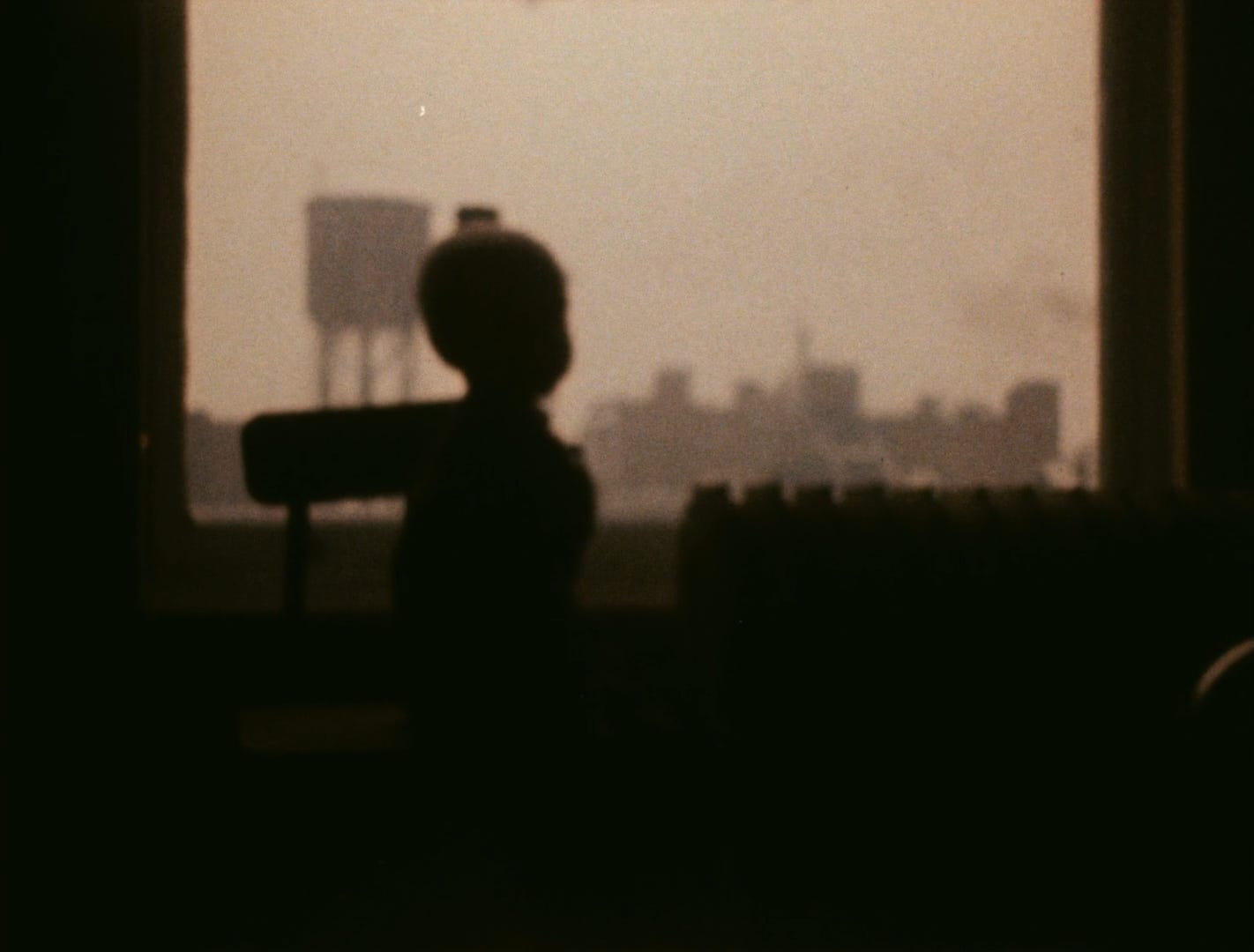
The first two films on this new list are both poetic non-fictions. Documentary as a term feels inadequate in describing what they do. I’m not sure there will ever be a film that captures the intimacy of cinema the same way as Jonas Mekas in As I Was Moving Ahead, Occasionally I Saw Brief Glimpses of Beauty. It’s a film of ghosts; random (but somehow, never random) images of family, friends and flowers. Mekas, who identified as a filmer rather than a director, utilised cinema and the camera in a way that defied industry. It symbolizes a cinema that requires little and offers everything. He remains the gold standard.
My second choice, Forugh Farrokhzad’s The House is Black, was a film I found myself revisiting nearly a dozen times last year. It’s a movie about flesh and words; a rare literalization of poetic form through bodies and motion. It offers compassion without forgiveness; articulating through vulnerability the violence of the world we live in. Few films I’ve ever watched capture that sense of isolation and yearning with so much truth. Through naturalism, Farrokhzad observes a brutal but beautiful world through the faces and routines of the residents of a leper colony.
I won’t bore you with the rest of my thoughts. I’m not sure if there are any overarching themes aside from the obvious; blurred lines, painful desire and transgression. Many of these films are going to be subject of various essays I’m currently planning over the next year. So, hopefully you will get more in depth thoughts on them sooner than later.
Some fun facts about the list
There are five films from 1974 (Bring me the Head of Alfredo Garcia, Edvard Munch, Lancelot du Lac and Black Christmas) and five films from 1960 (Le trou, La Dolce Vita, The Apartment, When a Woman Ascends the Stairs and L’avventura)
38 films from USA, 36 from France, 17 from Italy, and 9 from the UK
Luis Buñuel and Pier Paolo Pasolini are the most represented directors with three each
The FULL TOP 100 is here on Letterboxd. I am happy to answer any questions or write about any films from the overall list. I am also open to any recommendations you might have!
As I Was Moving Ahead, Occasionally I Saw Brief Glimpses of Beauty (Jonas Mekas)
The House is Black (Forugh Farrokhzad)
Eyes Wide Shut (Stanley Kubrick)
Romance (Catherine Breillat)
Taste of Cherry (Abbas Kiarostami)
Edvard Munch (Peter Watkins)
The Red Shoes (Michael Powell & Emeric Pressburger)
Crash (David Cronenberg)
La belle noiseuse (Jacques Rivette)
Le trou (Jacques Becker)
La notte (Michelangelo Antonioni)
Gentlemen Prefer Blondes (Howard Hawks)
La religieuse (Jacques Rivette)
Lancelot du lac (Robert Bresson)
Stromboli (Roberto Rossellini)
Medea (Pier Paolo Pasolini)
The Awful Truth (Leo McCarey)
House of Tolerance (Bertrand Bonello)
Some Like it Hot (Billy Wilder)
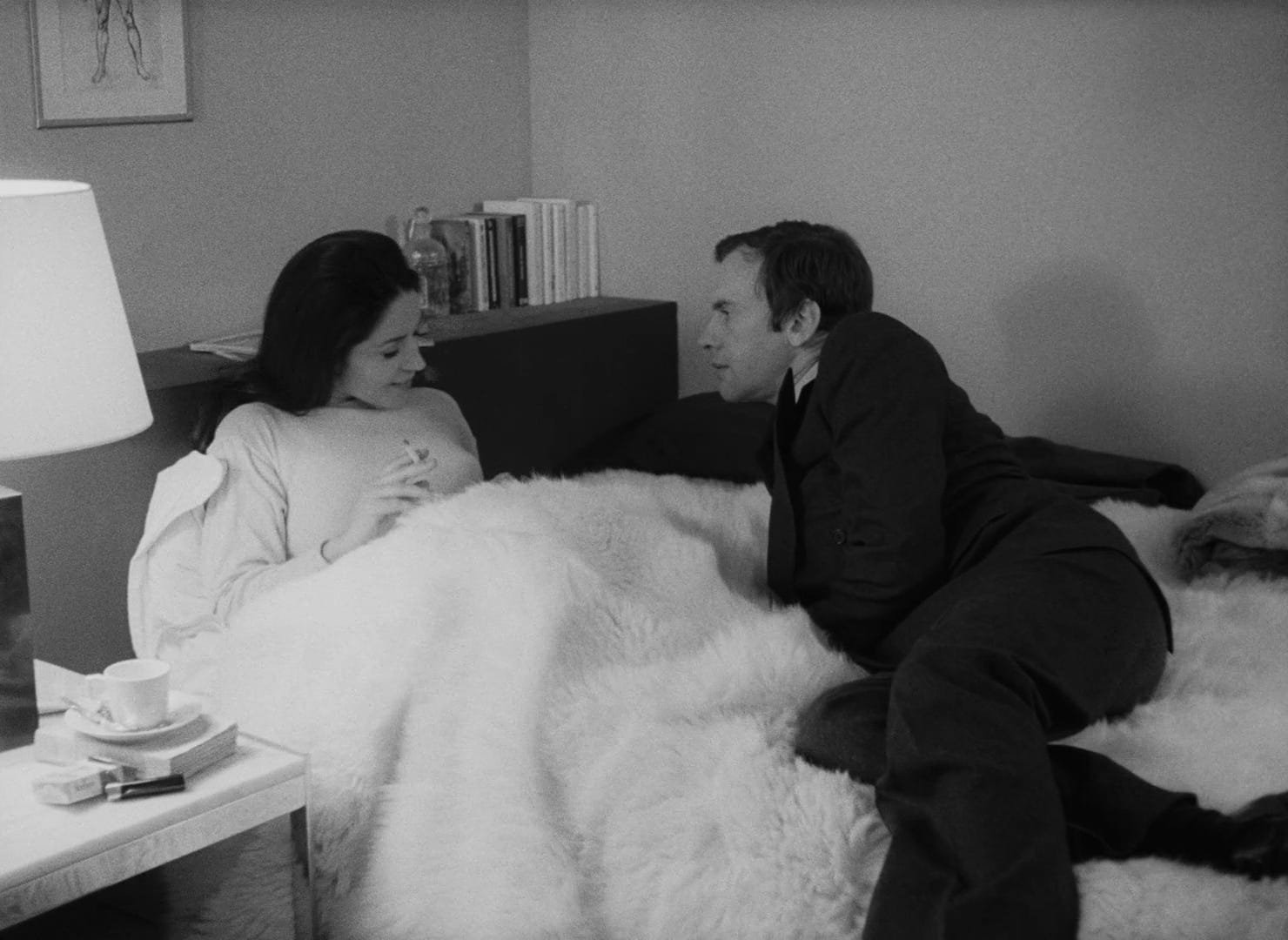
Ma nuit chez Maud (Éric Rohmer)
The New World (Terrence Malick)
Millennium Mambo (Hou Hsiao-hsien)
Scarred Hearts (Radu Jude)
It’s a Wonderful Life
The Brick & The Mirror (Ebrahim Golestan)
À nos amours (Maurice Pialat)
Jeanne Dielman, 23, quai du Commerce, 1080 Bruxelles (Chantal Akerman)
Under the Skin (Jonathan Glazer)
The Graduate (Mike Nichols)
Tabu (Miguel Gomes)
Sunrise: A Song of Two Humans (F.W. Murnau)
L’avventura (Michelangelo Antonioni)
Bring me the head of Alfredo Garcia (Sam Peckinpah)
Abraham’s Valley (Manoel de Oliveira)
The Texas Chain Saw Massacre (Tobe Hooper)
Viridiana (Luis Buñuel)
The Night of the Hunter (Charles Laughton)
We Won’t Grow Old Together (Maurice Pialat)
Rome, Open City (Roberto Rosselini)
Yi Yi (Edward Yang)
Salò, or the 120 Days of Sodom (Pier Paolo Pasolini)
Woman in the Dunes (Hiroshi Teshigahara)
Reds (Warren Beatty)
Visite ou mémoires et confessions (Manoel de Oliveira)
Les enfants du paradis (Marcel Carné)
The Apartment (Billy Wilder)
Lake Mungo (Joel Anderson)
Laura (Otto Preminger)
The Wizard of Oz (Victor Fleming)
The Deer Hunter (Michael Cimino)
The Birds (Alfred Hitchcock)
Right Now, Wrong Then (Hong Sang-soo)
The Passion of Joan of Arc (Carl Theodor Dreyer)
La Dolce Vita (Federico Fellini)
The Married Woman (Jean-Luc Godard)
Vertigo (Alfred Hitchcock)
The Godfather (Francis Ford Coppola)
Bram Stoker’s Dracula (Francis Ford Coppola)
Hellraiser (Clive Barker)
Solaris (Andrei Tarkovsky)
Rocky (John G. Avildsen)
Persona (Ingmar Bergman)
In the Realm of the Senses (Nagisa Ōshima)
Dark Waters (Todd Haynes)
Brief Crossing (Catherine Breillat)
The Wind will Carry Us (Abbas Kiarostami)
Les salauds (Claire Denis)
Shadows of Forgotten Ancestors (Sergei Parajanov)
Lost Highway (David Lynch)
Behind Convent Walls (Walerian Borowczyk)
The Beast (Bertrand Bonello)
Late Spring (Yasujirō Ozu)
Belle de Jour (Luis Bunuel)
The French Connection (William Friedkin)
La bête lumineuse (Pierre Perrault)
Brief Encounter (David Lean)
Kanehstake: 270 Years of Resistance (Alanis Obomsawin)
Leon Morin, pretre (Jean-Pierre Melville)
God’s Comedy (João César Monteiro)
Theorem (Pier Paolo Pasolini)
Edward and Caroline (Jacques Becker)
Before Sunset (Richard Linklater)
Black Christmas (Bob Clark)
Safe (Todd Haynes)
The Long Goodbye (Robert Altman)
Le bonheur (Agnès Varda)
Senso (Luchino Visconti)
Les rendez-vous d’Anna (Chantal Akerman)
Blind Husbands (Erich von Stroheim)
Fuses (Carolee Schneemann)
Meet Me in St. Louis (Vincente Minnelli)
The Last Picture Show (Peter Bogdonovich)
Stranger by the Lake (Alain Guiraudie)
The exterminating angel (Luis Bunuel)
The Celebration (Thomas Vinterberg)
When a Woman Ascends the Stairs (Mikio Naruse)
To Be or Not to Be (Ernst Lubitsch)
Window Water Baby Moving (Stan Brakhage)
Stars in my Crown (Jacques Tourneur)
Nostos: The Return (Franco Piavoli)
La religieuse was Rivette not Antonioni. great list otherwise!
You’ve convinced me to make my own version (and we films share a fair number of films)